OCTOPATH TRAVELER: CotC
- 4.5
- Rating
- 500.00K
- Installs
- Free
- Price

 Analysis by App-foxy
I approached OCTOPATH TRAVELER: CotC as a compact role-playing game for moments when I want a story-led adventure without committing to a long console session. It carries the familiar Octopath identity into a mobile format, with a presentation that feels more deliberate than the average free-to-play RPG. My first impression was that it is aimed at players who enjoy reading, building a party, and making careful decisions rather than simply tapping through battles as quickly as possible.
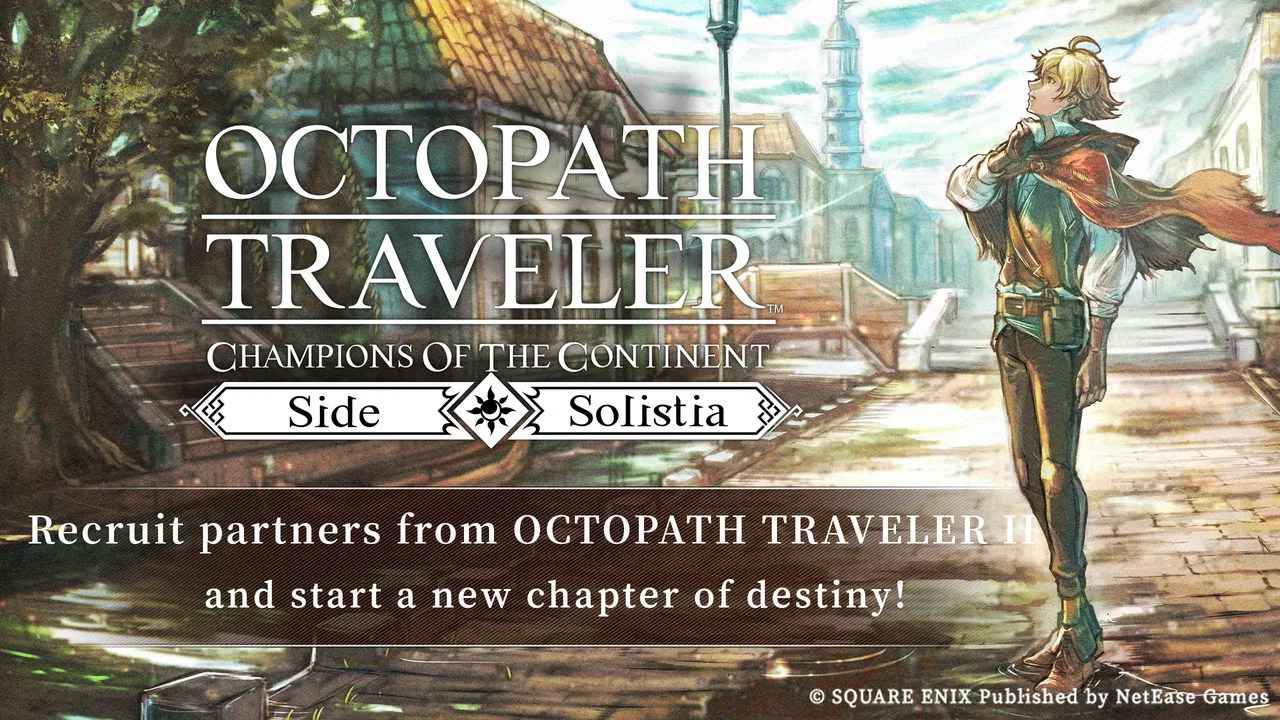
The game is free to download and is developed by Exptional Global. It is listed for Teen audiences, runs on Android devices using version 6.0 or later, and currently appears as version 4.2.5. The store page highlights the OCTOPATH DAY event, so the current experience is not just the original launch package; it is a live version that continues to receive event-focused attention. That matters because a mobile RPG can change considerably after release, especially for someone deciding whether to start now or return after a break.
How the current mobile adventure feels
What makes this game stand out is its attempt to preserve a traditional, story-heavy RPG mood on a phone. The world feels built for players who like visiting towns, meeting characters, following separate personal stories, and gradually seeing those threads connect. I found myself treating it less like a quick arcade game and more like a portable book with battles between chapters.
You May Also Like

 Blood Strike: 2.5 Anniversary
Blood Strike’s Loadouts Turn Every Drop Into a Tactical Gamble
A close look at Blood Strike’s custom loadouts: how fast access to signature weapons reshapes its battle royale rhythm, rewards preparation, and narrows the gap between fights.

 Pandora - Music & Podcasts
Pandora’s Music Is Easy to Start, but Harder to Recover
Pandora’s strength is its low-effort path from a seed to a station. Its weak spot is how much confidence it asks you to place in connection, setup, and quiet recovery.

 8 Ball Pool
 Is Built on Rivalries, Rematches, and Routine
A close look at the rivalries, rematches, shared routines, and unanswered safety questions that turn a quick pool match into a persistent mobile community.

 Samsung Music
’s Quiet Strength Is Playing What You Already Own
Its reach comes less from spectacle than from dependable access to a personal library. That simplicity is both the app’s strongest retention engine and its ceiling.

 AccuWeather: Weather Radar
AccuWeather Review: A Quick, Clear Forecast for Everyday Decisions
For everyday plans, the best forecast is the one you can understand quickly. AccuWeather makes rain timing, radar, and local conditions easy to act on, with a few trade-offs.

 Hill Climb Racing
Why Hill Climb Racing Still Turns Crashes Into One More Run
A tiny car, a bumpy hill and one more upgrade: Hill Climb Racing keeps resurfacing because its simple chaos makes every near-miss feel personal.
More From Our News Desk
View All News


The visual style is one of its strongest qualities. The combination of detailed pixel characters and layered environments gives locations a sense of depth without losing the classic role-playing look. On a smaller screen, that can make menus and scenery feel busy, but the overall presentation still has a distinctive identity. It does not look like a generic fantasy game assembled from interchangeable assets.
Combat is turn-based, which immediately makes the game more approachable for players who prefer planning over reflexes. I could think about weaknesses, choose whether to attack, defend, or prepare for a stronger turn, and decide which character should take the lead in a particular exchange. That rhythm is especially comfortable during a commute or a quiet break, because the game does not demand constant rapid input.
At the same time, the slower structure will not suit everyone. If you want an action RPG with movement, dodging, and real-time combos, this is the wrong direction. Even players who enjoy turn-based games may find the opening stretches patient rather than explosive. The reward is a more measured journey, but the game asks you to give its story and systems time before they fully settle into place.
Party decisions matter more than button speed
The most useful change in my playing habits was learning not to judge a character only by immediate damage. A well-prepared party is about coverage, timing, and knowing when to spend a resource. I began checking which roles I was missing before entering unfamiliar content instead of relying on a favorite group for every situation.
That approach also makes ordinary battles more interesting. A character who looks less impressive in a single attack can still be valuable if they help expose an enemy weakness or protect the party while another member prepares a stronger action. My practical tip is to keep a flexible core rather than investing attention in only the first characters who join. It reduces the frustration of reaching a difficult encounter and discovering that the party has no answer for its demands.
The game is also easier to appreciate when I separate story progress from optimization. I did not need to chase the perfect setup before enjoying the next chapter. For a new player, I would recommend learning the battle flow first, then improving the roster gradually. That prevents the free-to-play structure from becoming the only thing you notice.
A live version rather than a fixed release
The current version, 4.2.5, gives the game a more developed identity than a newly launched mobile title. The release date was January 8, 2025, and the presence of the OCTOPATH DAY event shows how the experience is being framed as an ongoing service. I would not treat the launch version and the current version as identical in spirit: players arriving now are entering a maintained product with event activity already shaping the front page.
For existing users, that kind of evolution can be helpful because events give a reason to return after finishing a story segment. They can also create pressure. A player who enjoys a calm, self-paced RPG may feel pulled toward limited activities or daily routines instead of simply following the adventure. My advice is to decide early whether events are an optional bonus or the main reason you play. The game is healthier when you use its live content to enrich your routine rather than letting it dictate your schedule.
The current presentation also makes the game more inviting to people who previously dismissed mobile RPGs as shallow. The Octopath setting, careful art direction, and turn-based structure provide a stronger foundation than a simple collection of repetitive fights. Still, a mature mobile RPG inevitably comes with more layers to manage, and a returning player may need patience to remember where their party, equipment, and unfinished goals stand.
What the free price really means in practice
There is no purchase required to begin, which makes trying the game straightforward. However, optional purchases range from $0.29 to $83.00 per item. That wide range is important because the free entry point and the long-term spending experience are not the same thing. I could start without paying, but anyone who becomes invested in expanding a roster or keeping pace with event content should set a personal limit before spending.
I recommend treating the shop as a convenience layer, not as a solution to every difficult battle. When progress slows, first check whether the problem is party composition, equipment, or an unfamiliar battle pattern. Spending can feel tempting when a new character or event is presented attractively, but it does not replace learning how the encounter works. This is one of the clearest trade-offs in the game: the story can be enjoyed for free, while the broader collection side may appeal more strongly to players comfortable with optional purchases.
For parents, the Teen rating is a useful starting point, but it should not be confused with a guarantee that the game will fit every younger player. The story, fantasy conflict, and purchase options are worth considering together. I would personally recommend checking the device’s purchase controls before handing the game to a child, especially because a free download can still contain items at very different price levels.
Small habits that make the journey smoother
My first practical suggestion is to avoid rushing through every conversation. The writing and character focus are part of the reason to choose this game over a faster, more combat-centered alternative. If I skipped the narrative simply to reach the next reward, I would be left with a slower version of a standard mobile grind. The story is not decoration here; it is the main reason the structure works.
Second, I found it useful to pause after a difficult battle and identify the actual failure. Was the party missing a useful attack type? Did I spend powerful actions too early? Was one character carrying too much of the defensive burden? Asking those questions is more effective than repeatedly entering the same fight and hoping for a better result.
Third, I would keep some room for experimentation. A roster-based RPG encourages attachment to familiar characters, but a comfortable party can become a limitation if it prevents you from testing alternatives. I had better results when I rotated members during easier encounters, because that gave me a clearer sense of their roles before a demanding story battle forced the issue.
A fourth tip is to play in short, intentional sessions. The game works well when I have enough time to complete a story conversation and a few battles, but it can feel tiring if I try to clear everything in one sitting. Mobile role-playing games often become less enjoyable when progress turns into a checklist. Here, the slower pace is a strength when I respect it and a weakness when I fight it.
Where it compares well with other mobile RPGs
Compared with an action-focused mobile RPG, this game is more comfortable for players who want control over the pace. I can put the phone down between turns, read at my own speed, and return to a battle without needing perfect reflexes. That makes it a good companion for travel, waiting rooms, or an evening when I want a game that feels thoughtful rather than frantic.
Compared with a simpler idle RPG, it demands more attention. I cannot expect the experience to be satisfying if I only collect rewards and let the game play around me. The appeal comes from following stories, making party choices, and understanding why a battle is difficult. Someone who wants a mostly automatic progression loop will probably be happier with a different type of mobile title.
It also differs from a traditional offline role-playing game in its relationship with events and optional purchases. A console-style adventure usually lets me focus on a fixed campaign at my own pace. Here, the live-service element can add freshness, but it can also interrupt that sense of a single, self-contained journey. Players who value a complete offline experience should think carefully before choosing this as their main RPG.
Who will enjoy it, and who should skip it
I would recommend it to fans of classic turn-based role-playing, especially those who enjoy ensemble casts and stories that give different characters room to develop. It is also a good fit for someone who wants a visually distinctive game that can be played in measured sessions. The mobile format is convenient without forcing the game into an entirely casual shape.
I would be more cautious recommending it to players who dislike reading, repeat battles, or roster management. The game asks for patience, and its free-to-play structure becomes more noticeable as a player engages with the wider collection and event side. If the ideal mobile game for you is a short action challenge with immediate results, this will probably feel slow.
It may also be a poor choice for anyone who wants to avoid in-app purchases completely while still feeling compelled to pursue every event or character. You can begin for free, but the healthiest way to approach it is with clear boundaries and modest expectations. Enjoy the story and combat first; decide later whether the optional collection layer deserves any money.
What I would watch as the game continues
The most important question for the future is how well the live content supports the original role-playing experience. Events should give returning players a meaningful reason to play without making newcomers feel permanently behind. The current OCTOPATH DAY focus makes that balance especially relevant: a celebration can be welcoming, but it can also make the game appear more complicated if too many systems compete for attention.
I would also watch how the current version affects pacing for new players. A long-running mobile RPG can accumulate content, rewards, and menus until the opening hours feel crowded. The best outcome would be a clear path through the main adventure, with optional event material remaining genuinely optional. That distinction matters more to me than simply adding more things to do.
For established players, the key issue is whether new activity respects the time they have already invested. Returning after a break should feel like picking up a favorite book, not like starting a second job. If the game keeps its story focus while giving experienced parties fresh reasons to think, it will remain easier to recommend.
My final view is positive, with sensible reservations. The game has enough personality to stand apart from routine mobile RPGs, and its turn-based battles reward attention rather than speed. The strongest experience comes from treating it as a substantial portable adventure, not as a quick reward machine. With an average rating of 4.5 from around 21 thousand ratings and more than 500 thousand installs, it has clearly attracted a sizeable audience, but popularity alone is not the reason I would suggest it.
I would suggest trying it if you want Octopath-style storytelling, deliberate combat, and a game that can grow with regular play. I would skip it if you need a completely offline, one-time purchase experience or dislike optional spending pressure. For me, the deciding factor is simple: when I let the story lead and use the live events selectively, OCTOPATH TRAVELER: CotC feels like a thoughtful RPG rather than another disposable phone game.
FAQs for OCTOPATH TRAVELER: CotC
01What is OCTOPATH TRAVELER: CotC?
OCTOPATH TRAVELER: Champions of the Continent is a single-player mobile RPG set in the world of Orsterra. It takes place before the events of the original OCTOPATH TRAVELER and follows several story paths involving heroes, villains, and powerful rulers. The game combines turn-based battles, exploration, character recruitment, and a distinctive HD-2D visual style inspired by classic role-playing games.
02Is OCTOPATH TRAVELER: CotC free to play?
Yes, OCTOPATH TRAVELER: CotC is free to download and play on compatible Android and iOS devices. However, it includes optional in-app purchases, mainly connected to acquiring rubies, special bundles, and additional character-draw opportunities. You can progress through much of the story without paying, although collecting specific high-rarity characters or keeping up with limited-time banners may require patience or spending.
03Does the game require an internet connection?
Yes, an active internet connection is generally required to play OCTOPATH TRAVELER: CotC. The game connects to its servers for account access, story content, events, character summons, updates, and progress synchronization. Because of this requirement, it is not a suitable choice for completely offline gaming. A stable Wi-Fi or mobile-data connection is recommended, especially when downloading updates or playing for extended sessions.
04How does combat work in OCTOPATH TRAVELER: CotC?
Combat uses a strategic turn-based system built around weaknesses, shields, and careful party management. Enemies can be weakened by attacking their vulnerable weapon types or elements, and breaking their shields leaves them exposed to increased damage. You can arrange front-row and back-row characters, switch units during battle, save boost points, and plan turns around healing, buffs, debuffs, and powerful attacks.
05Is OCTOPATH TRAVELER: CotC suitable for new players and fans of the original game?
The game is accessible to newcomers because it explains its basic systems gradually and offers several story routes to explore. Fans of the original OCTOPATH TRAVELER will appreciate the familiar art direction, music, world-building, and weakness-based combat, although the mobile format introduces gacha recruitment and live-service events. Players should also expect a slower progression pace and a larger focus on collecting and improving a broad roster.
Pros
- Faithful HD-2D visuals capture the charm of the original game.
- Deep turn-based battles reward careful weakness targeting and party planning.
- Large cast of characters offers varied skills and team-building options.
- Frequent story chapters provide substantial content for an RPG fan.
- Playable offline in many situations after required data is downloaded.
Cons
- Gacha recruitment can make obtaining favorite characters unpredictable.
- High-rarity units may require significant resources to upgrade fully.
- Energy and daily systems can slow progress during longer play sessions.
- The interface and menus may feel overwhelming for newcomers.
- Large downloads and updates can consume considerable device storage.

OCTOPATH TRAVELER: CotC
Gallery